Guests forgive a late canape. They don’t forgive a speech they couldn’t hear, or a slide they couldn’t read from row twenty. AV is the part of an event people only notice when it fails, which is exactly why it deserves attention early in the planning process rather than three days before the doors open.
This guide covers how we specify AV for events across Sharjah, Dubai and Abu Dhabi, with the numbers and venue realities behind each decision.

What you'll take away
- Screen size is dictated by the distance to your back row, not by your budget
- LED screens handle bright rooms; projectors need darkness you can actually control
- Microphone count should be driven by your run of show, not your speaker count
- UAE venues have rigging, power and sound-level rules that change what’s possible
- Outdoor events here need heat, dust and power planning that indoor events don’t
- The rehearsal matters more than the equipment list
Start With the Run of Show, Not the Equipment List
The most common mistake is specifying equipment before the programme exists. A government forum with six speakers, two video packages and a bilingual presentation needs a fundamentally different setup from an awards dinner with a single host and an hour of entertainment, even if both are for 300 people in the same ballroom.
Before anyone quotes you for AV, write down:
- Every segment of the programme, with timings
- Who speaks, where they stand, and whether they move
- What appears on screen in each segment and who controls it
- Whether any content is in Arabic, English, or both
- Whether anything is recorded, streamed or photographed
- Who makes the final call on cues during the event
Survey the Venue Before You Specify Anything
Rooms behave differently, and UAE venues vary more than most. A ballroom at Al Jawaher Reception & Convention Centre in Sharjah, an exhibition hall at Grand Hyatt Dubai, a university auditorium and an outdoor plaza each impose different constraints on the same event concept.
| Check | Why it matters |
|---|---|
| Ceiling height and rigging points | Determines whether screens can fly or must be ground-supported |
| Available power, and where the panels are | Dictates cable runs and whether you need distribution or a generator |
| Natural light and window positions | Decides LED versus projection |
| Room depth to the last seat | Sets minimum screen size |
| Column positions and sightlines | Reveals where second screens are needed |
| Load-in access and lift dimensions | Affects build time and what physically fits |
| Venue sound limits and curfews | Some venues cap decibels or restrict late load-outs |
| In-house AV exclusivity | A number of UAE hotels require you to use or pay through their supplier |
💡 That last point catches people out regularly. Confirm early whether your venue permits external AV suppliers, because it changes the budget, not just the logistics.
Sizing Screens: The Rule That Settles Most Arguments
The usable guideline is the 4/6/8 rule, worked from the distance to your furthest seat:
- 4× screen height – the closest comfortable viewing distance
- 6× screen height – the maximum distance for detailed content such as spreadsheets or dense slides
- 8× screen height – the maximum distance for simple content such as video, headlines or branding
So if your back row is 24 meters from the stage and you’re showing detailed presentation content, you need a screen at least 4 meters high. If it’s video and branding only, 3 meters will hold up.
💡 Where a single screen can't serve the room, add side screens or delay screens rather than oversizing the main display. In wide ballrooms, two 3-metre side screens usually outperform one 5-metre centre screen.
LED Screen or Projector?

| LED screen | Projector | |
|---|---|---|
| Bright or daylit rooms | Works at full brightness | Washes out unless blacked out |
| Outdoor daytime | The only reliable option | Not viable |
| Image at close range | Depends on pixel pitch | Smooth at any distance |
| Setup time | Longer build, needs structure | Faster to rig |
| Cost | Higher | Lower for large images |
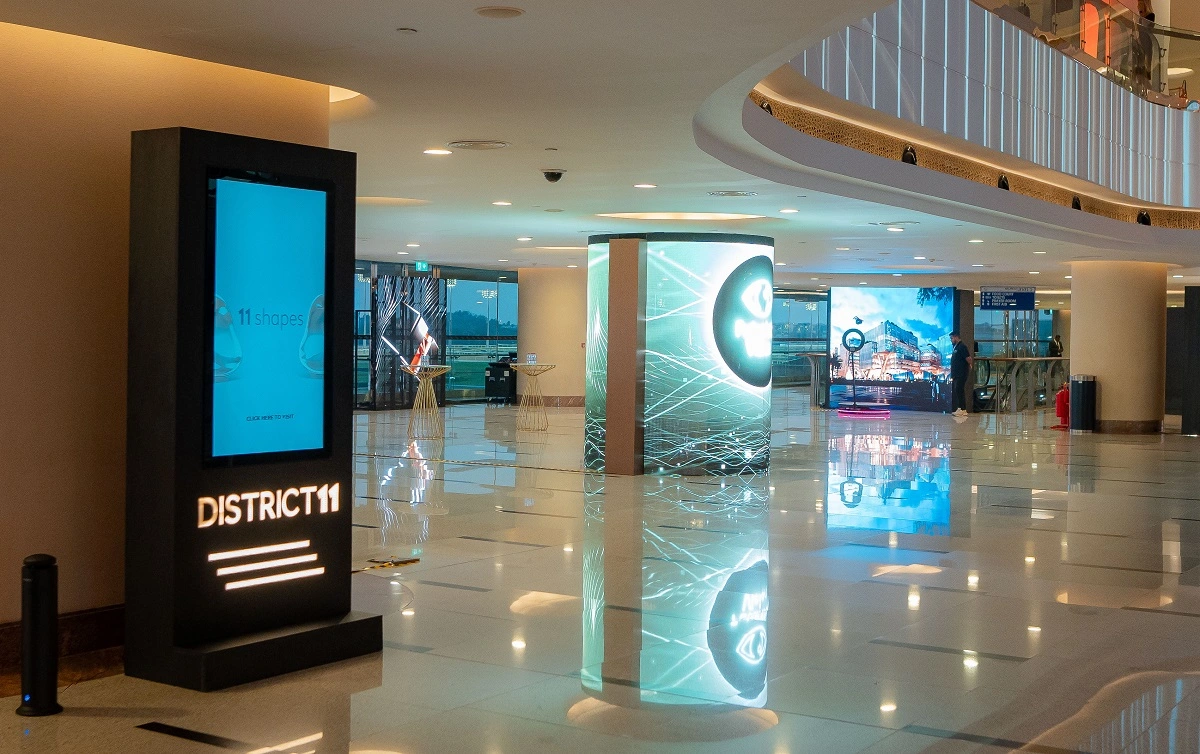
| Shape flexibility | Curved, circular, floor, tunnel | Flat surfaces only |
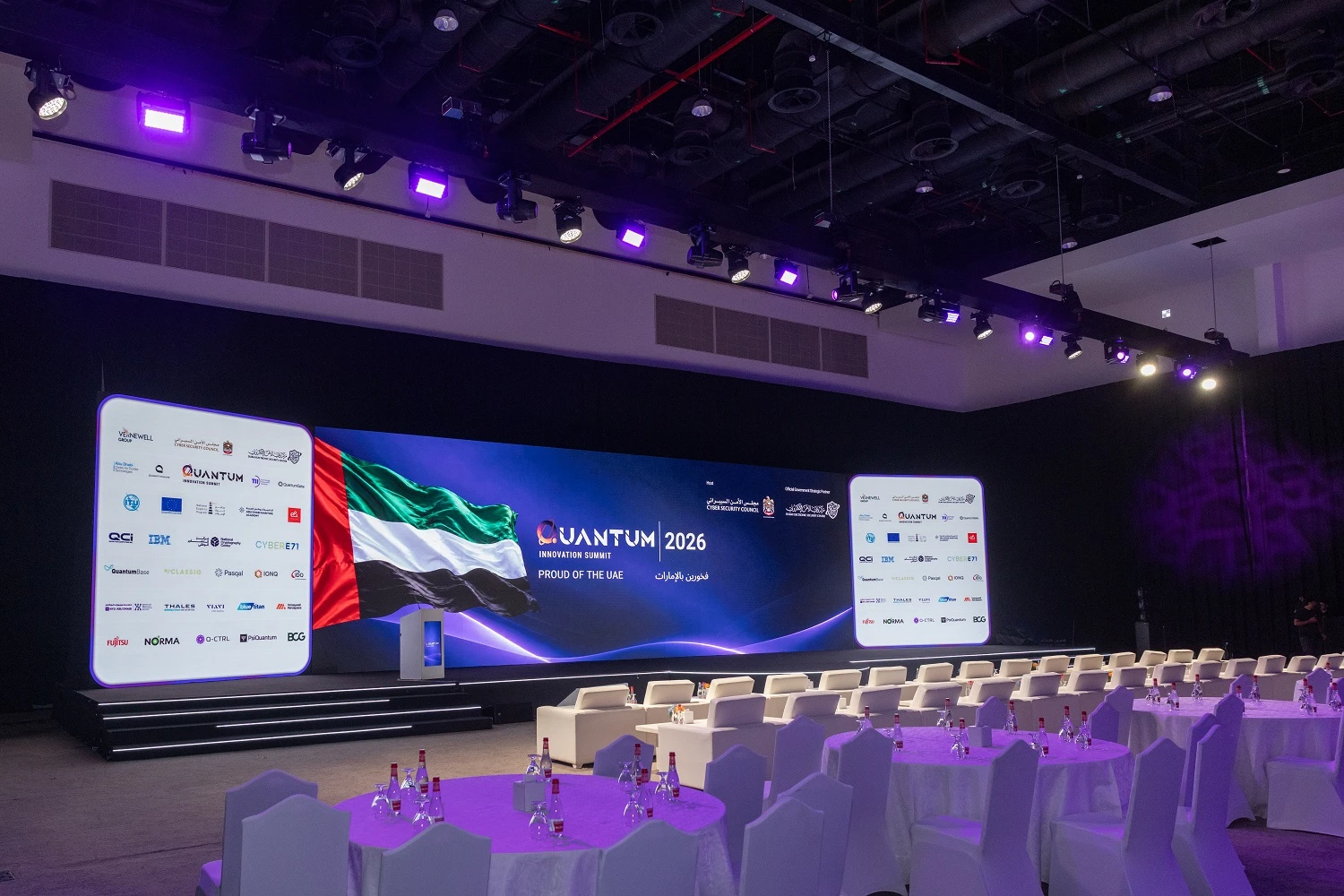
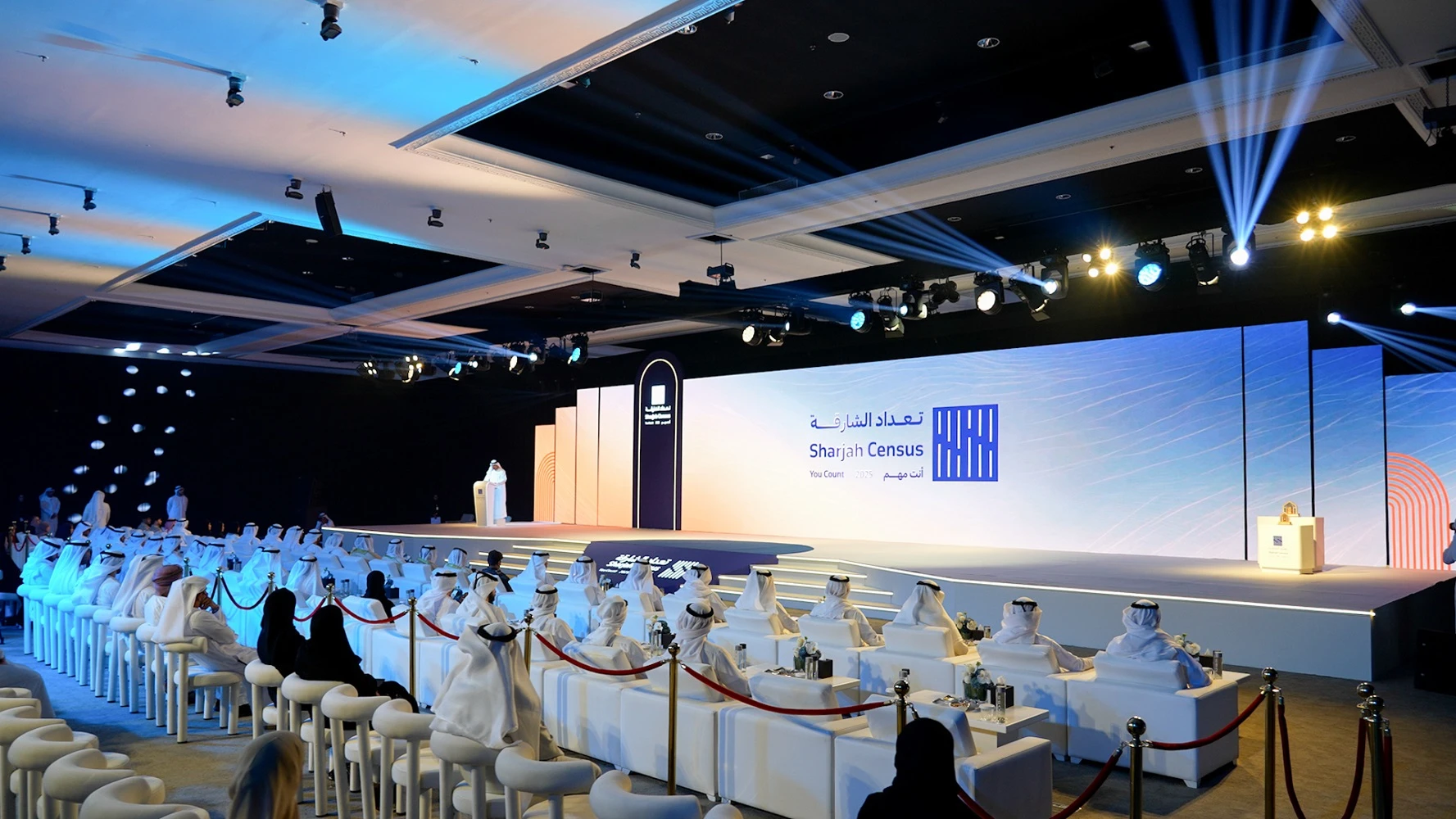
For most UAE conferences, ceremonies and launches, LED has become the default, because hotel ballrooms here are rarely dark enough for projection to look its best, and clients increasingly want screens that are part of the stage design rather than a rectangle behind it.
Pixel pitch, in plain terms: the number after the “P” is the gap between LEDs screens in millimetres. Smaller means a sharper image at close range, and a higher cost.
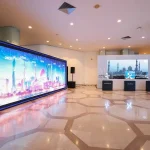
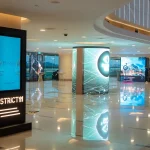
- P1.9 – exhibition stands, lobbies, close-viewed displays, anything guests stand within a few metres of
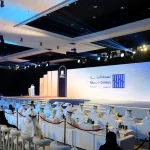
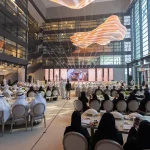
- P2.6 and P2.9 – indoor conferences, gala dinners and award ceremonies, the usual choice for ballroom stages
- P3.9 – outdoor and large-format screens, weather-resistant and bright enough for daylight
- Flexible modules – curved, circular and custom-shaped builds
💡A rough rule: your minimum comfortable viewing distance in meters is roughly the pixel pitch number. A P3.9 screen looks excellent from 4 meters back and pixelated from 1 meter.
Build the Sound System Around the Room, Then the Content
Speech and music need different things. Speech needs clarity in the mid-range and even coverage so the back row hears the same thing as the front. Music needs headroom and low-end extension. Specifying one when you need the other is a common and expensive error.
Coverage before power. A single pair of speakers at the front of a long, low ballroom will be too loud at row three and too quiet at row twenty. Line arrays or distributed delay speakers solve this far better than simply adding wattage.
Microphone planning by segment, not by person. Count the simultaneous live microphones your run of show demands:
- Podium – a gooseneck microphone on the lectern, plus a spare
- Hosts and presenters – headset or lapel microphones, one per person on stage at the same time, never shared between speakers mid-programme
- Panels – one gooseneck or table microphone per seat, or a handheld per two panellists
- Audience Q&A – at least two roving handhelds so the next question is ready while the first is being asked
- VIP and protocol speeches – always a redundant backup microphone, already tested and live on a separate channel
💡 Always add spare channels. Reconfiguring a receiver rack on the day is far harder than reserving two extra channels at the planning stage.
Lighting: Visibility First, Atmosphere Second

Two jobs, in this order. Visibility: every speaker must be lit well enough to be seen clearly from the back and to photograph properly. Front light on faces, not just top light, which creates shadows under the eyes. Atmosphere: uplighting, wash and moving fixtures that set the mood and support the brand palette.
If the event is being filmed or photographed, bring your lighting designer and your camera team together before the plot is finalised. Lighting that looks superb to the eye can be unusable on camera, and colour temperature mismatches between stage wash and house lights are a frequent cause of unusable footage.
For bilingual or protocol events, make sure the lectern is lit for both the speaker and the camera, and that any flag or emblem on stage is correctly and evenly lit. On government events, that detail gets noticed.
Power, Heat and Outdoor Events in the UAE

Outdoor events here face conditions that generic AV guides don’t address.
Heat. Amplifiers, LED processors and media servers throttle or shut down when they overheat. Shaded and ventilated positions for the control and amp racks aren’t optional between April and October, and from May to September, daytime outdoor events generally need to move to evening or into a cooled structure.
Dust and humidity. Coastal humidity and fine dust affect connectors and moving fixtures. Outdoor LED needs an appropriate IP rating, and cable terminations need protecting.
Power. Work out your total load before you book anything. Add up LED processors and panels, amplifiers, lighting fixtures, and video and control systems, then add headroom. Venue power in the UAE is often sufficient for an indoor conference but not for an outdoor build. For desert, beach, free-zone and open-plaza events, budget for a silenced generator plus a backup, with a distribution plan drawn in advance.
Sand, grass and uneven ground. Ground-supported screens and truss need load-spreading plates. Wind loading on outdoor LED is a structural calculation, not a guess, and must be signed off before the build.
Rehearse, Then Rehearse the Transitions
Testing individual pieces of equipment is the easy part. The failures that hurt almost always happen between segments: the presenter walks on before the lighting cue, the video plays without audio, the second speaker’s microphone is still muted.
Minimum rehearsal schedule:
- Technical check of every microphone, from the actual positions they’ll be used
- Audio coverage walked and checked from the back and side seats
- Every slide deck and video run on the show system, not a laptop in the office
- Lighting states set and recorded for each programme segment
- Full transition rehearsal, segment to segment, in sequence
- Speaker walk-through, ideally with the real speakers
- Backup check: spare microphone, spare batteries, duplicate content files on a separate drive
Build this time into the venue booking. Load-in plus rehearsal is where most AV problems get solved, and squeezing it is a false saving.
Don't Forget the Crew

Equipment doesn’t operate itself. A conference with multiple speakers, video playback, lighting cues and a tight schedule needs, as a minimum, a sound engineer, a lighting operator, a video or screens operator, and a show caller who runs the sequence and talks to all of them.
The show caller is the role most often cut from budgets and most often missed on the day. When a speaker overruns, a VIP arrives late or a video has to be replayed, someone needs to make that decision in real time and communicate it to every department at once.
A Simple AV Budget Guide
For a typical UAE corporate or government event, AV and production usually represents 20% to 35% of the total event budget, rising above that for launches and ceremonies where the stage is the main attraction, and falling below it for networking or hospitality-led events.
Where it’s worth spending first:
- Clear audio. Nothing else matters if people can’t hear.
- A screen people can actually read, sized for the back row.
- Lighting on faces, so speakers are visible and the event photographs well.
- Crew and rehearsal time.
- Spectacle, such as kinetic LED, floor screens, tunnels and special effects, once the first four are secure.
Working With One Supplier or Several
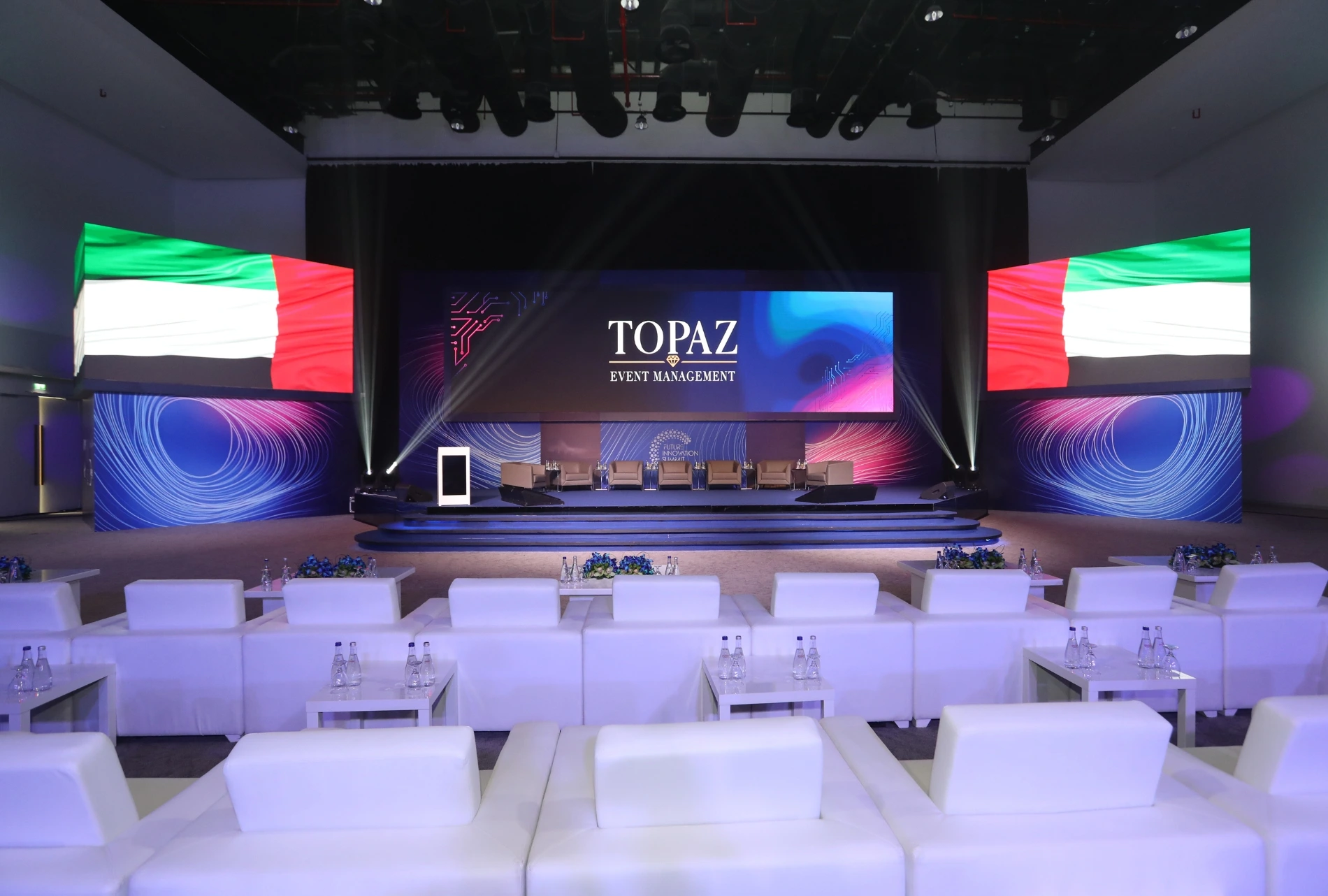
Splitting AV across multiple suppliers tends to push coordination onto the client. Sound, lighting, screens and staging all share the same rigging points, power and schedule, and when those are contracted separately, the gaps between them become your problem on build day.
At Topaz Events, LED screens, sound, lighting, interactive technology and staging come from our own inventory, with our own technical crew installing and operating them. That’s not a philosophical point. It means one build schedule, one team accountable for how the room looks and sounds, and no supplier-to-supplier negotiation when something needs to change at 2am during load-in.
Plan Your Event AV With Topaz
Topaz Events is an event management and production company headquartered in Sharjah, with offices in Dubai and Abu Dhabi. We own our LED screens, sound, lighting and interactive technology, and our own crew installs and operates them.